
As Edmonton Opera prepares for Siegfried, we connected with Samuel Levine to talk about stepping into one of opera’s most fearless and unpredictable heroes.
Part of Wagner’s monumental Ring Cycle, Siegfried follows a young hero driven almost entirely by instinct: a character who charges headfirst into danger, challenges gods and monsters, and discovers the world in real time.
For Samuel, understanding Siegfried wasn’t about overanalyzing the role. In many ways, it meant learning to let go of analysis altogether.
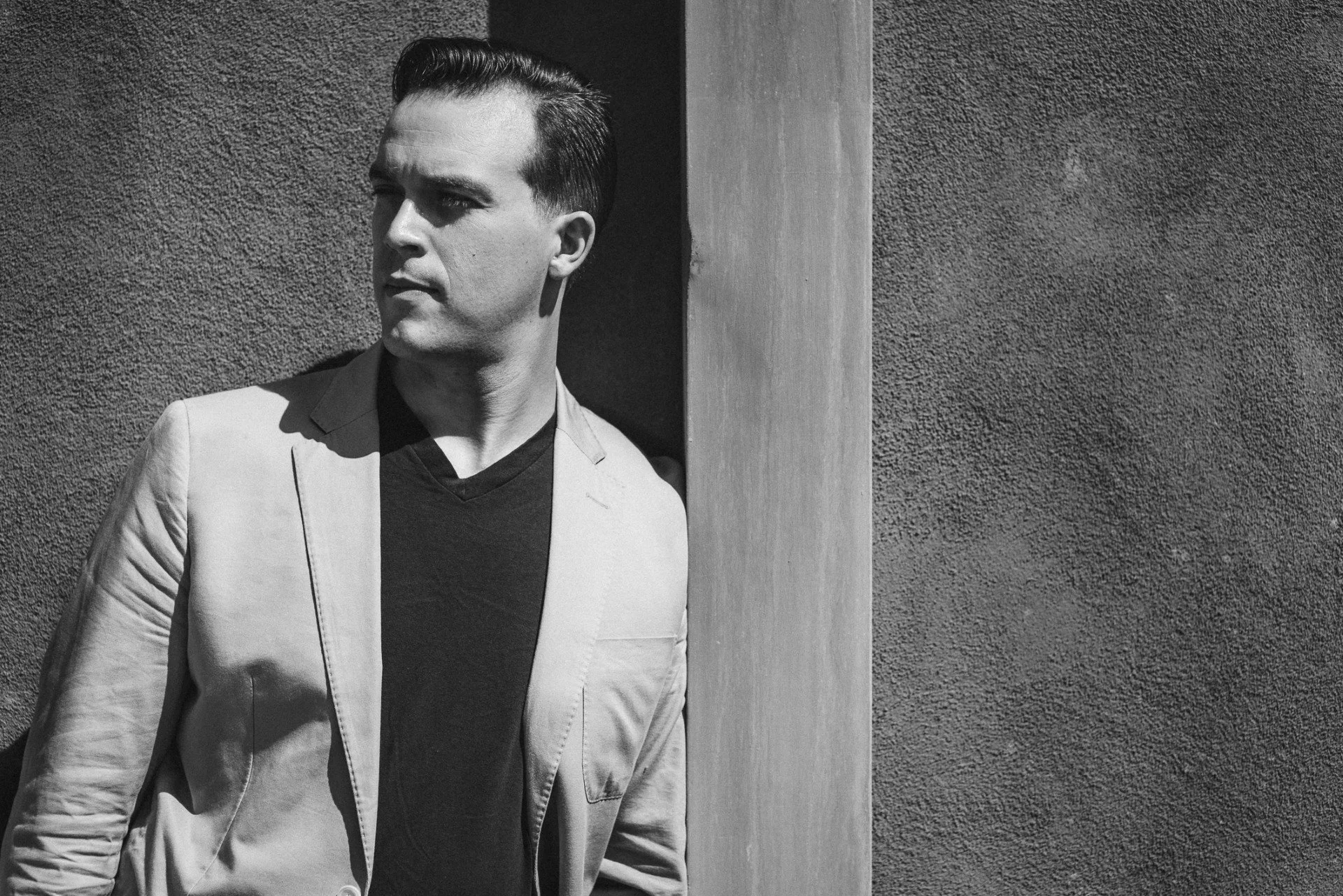
“He doesn’t think: he does.”
“There is no ‘figuring him out,’ because he is constantly in motion: as soon as you understand him in one moment, he has already forgotten and moved on to the next great adventure.
“In other ways, though, he is the least complicated figure in all of opera! Siegfried is entirely a creature of instinct, learning the world and seeking the limits of his own powers, all arrogance and swagger. Usually, developing an operatic character starts with long periods of research, reading, and study – reading plays, novels, and myths on which operas are based; studying the libretto, reading biographies, learning about the lives of the composer and librettist, etc – but in this case, that quiet work is itself antithetical to who Siegfried is. He doesn’t think: he does.”
Finding Siegfried in Fatherhood
While preparing for the role, Samuel found one of his biggest inspirations much closer to home.
“With that said, my Siegfried has two inspirations. At the time I received the invitation to join this project, my son was four years old. Like many kids that age, he gave a wonderfully clear illustration of what it truly means to ‘live in the moment.’
“Little kids have big passions, big wants, big needs, and complex, constantly shifting inner worlds based on what they see at any given time – and their needs are always urgent, always immediate. When they’re upset about something, they aren’t shy about letting you know.... And they aren’t shy about using force either!
“Like my son at that age, Siegfried can be unbelievably sweet, then unbelievably savage, then back again, all in millisecond. (I once read that the only reason any parent survives the second year of life is that toddlers don’t have weapons. If any of them had Siegfried’s physical strength, our species would be done for.)
“In the orchestral music that plays before my first vocal entrance, I still hear the pitter-patter of those four-year-old footsteps.”
“Siegfried absolutely detests being told what to do.”
But Siegfried’s impulsiveness is only part of the story.
For Samuel, one of the character’s defining qualities is his complete rejection of hierarchy and authority.
“Less childlike, though, is Siegfried’s deep hatred of hierarchy. I read somewhere that Wagner based Siegfried’s attitude on Bakunin, the icon of Anarchist politics and philosophy. This rings true throughout the opera: whether it’s his adopted father (Mime), an ancient, powerful dragon (Fafner), or the once all-powerful father of the gods (Wotan), Siegfried absolutely detests being told what to do.
“Here, Wagner found aspects of Anarchist thinking that resonated with his own experience: he hated the ‘gatekeepers’ of his own society, finding them constraining, unimaginative, and trapped in a past that no longer existed. (This is the primary theme of his second-to-last opera, Die Meistersinger von Nürnberg.)
“Siegfried may be an overgrown child discovering the world while smashing it to bits, but he’s also a revolutionary: an agent of change that the world needs.
“(Anyone who knows me well is probably chuckling reading this, knowing that I also have a rather complex relationship with being told what to do – just ask my primary school teachers. But that’s another story.)”
Wagner’s Influence Is Everywhere
For audiences experiencing Wagner for the first time, Samuel encourages people to listen for the echoes of stories, films, and music that followed in Wagner’s wake.
“It’s almost impossible to overstate Wagner’s impact on human culture. The RING was unlike anything that came before it, and inspired just about everything that came after: try to watch and listen for the roots of ideas and works as diverse as Star Wars, The Lord of the Rings, Apocalypse Now, early Disney movies, old Hollywood epics, Dune, as well as just about any music written since: Mahler, Debussy, Strauss, Puccini, Bernstein, John Williams.”
“Live theater was, is, and shall remain irreplaceable.”
At the centre of Siegfried, beneath the dragons and gods, is something much more human: adventure, connection, and shared experience.
“Modern life has a lot to recommend it, but can come up short on adventure: when it comes to slaying dragons, overthrowing gods, and magical talking birds, staring at screens is the best most of us can hope for.
“My hope would be that audiences walk away with some of Siegfried’s swagger, fearlessness, and pure joy – not only for themselves, but together with the other human beings sharing the experience.
“That human connection, that community, is the reason why live theater was, is, and shall remain irreplaceable.”
Join us for Siegfried
A bold, intimate adaptation of Wagner’s epic, Siegfried follows a young hero on a journey of discovery, forging his path, confronting fear, and awakening love.
Performed in German with English surtitles, this production brings a monumental story into an up-close theatrical experience, where every moment feels immediate, powerful, and deeply human.
Get your tickets and experience the final chapter of Edmonton Opera’s 2025/26 season.