
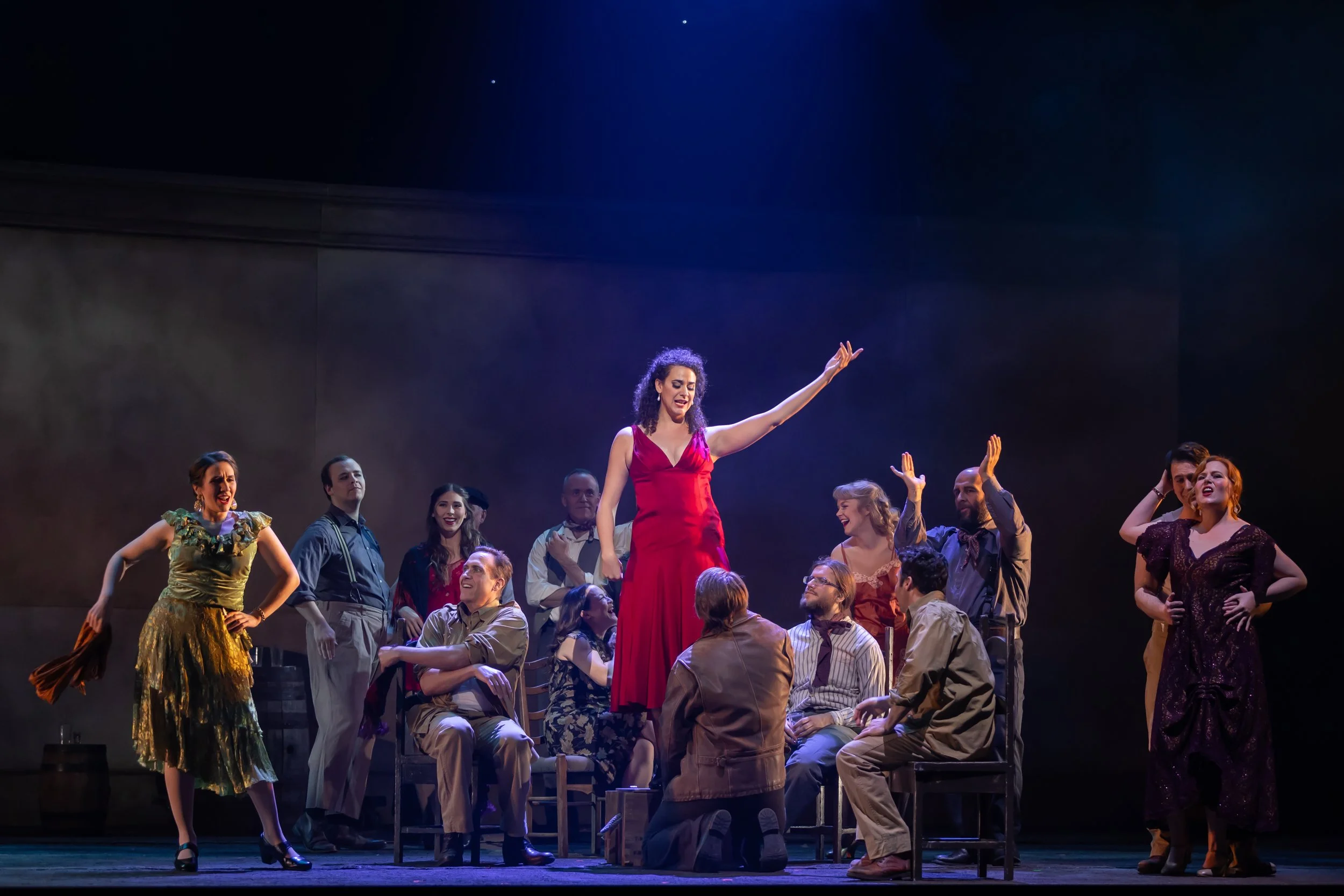
Carmen, Edmonton Opera, 2023
Whether you’re stepping into the theatre to watch opera for the first time or just brushing up on the basics, this guide is your quick tour through the essentials: what opera actually is, the people who bring it to life, and how to make sense of what’s happening on stage!
Opera can feel larger than life — and that’s the point! It combines music, theatre, and design into one big emotional experience. Ready to dive in?
WHAT IS OPERA | BUILDING OPERA | OPERA TERMS | VOICE TYPES | SONG TYPES
What Is Opera?
The word opera comes from the Italian for “work” — a piece of art made from many moving parts. At its simplest, opera is a story told entirely through live music and singing.
Unlike musicals, opera singers perform without microphones. Their voices are trained to project over a full orchestra, which plays live from the bit beneath the stage.
Opera dates back to the late-16th century Italy, when composers first began setting dramatic stories entirely to music. It spread quickly throughout Europe and has evolved ever since. From grand historical tragedies to modern stories that take place in offices, subways, and even outer space.
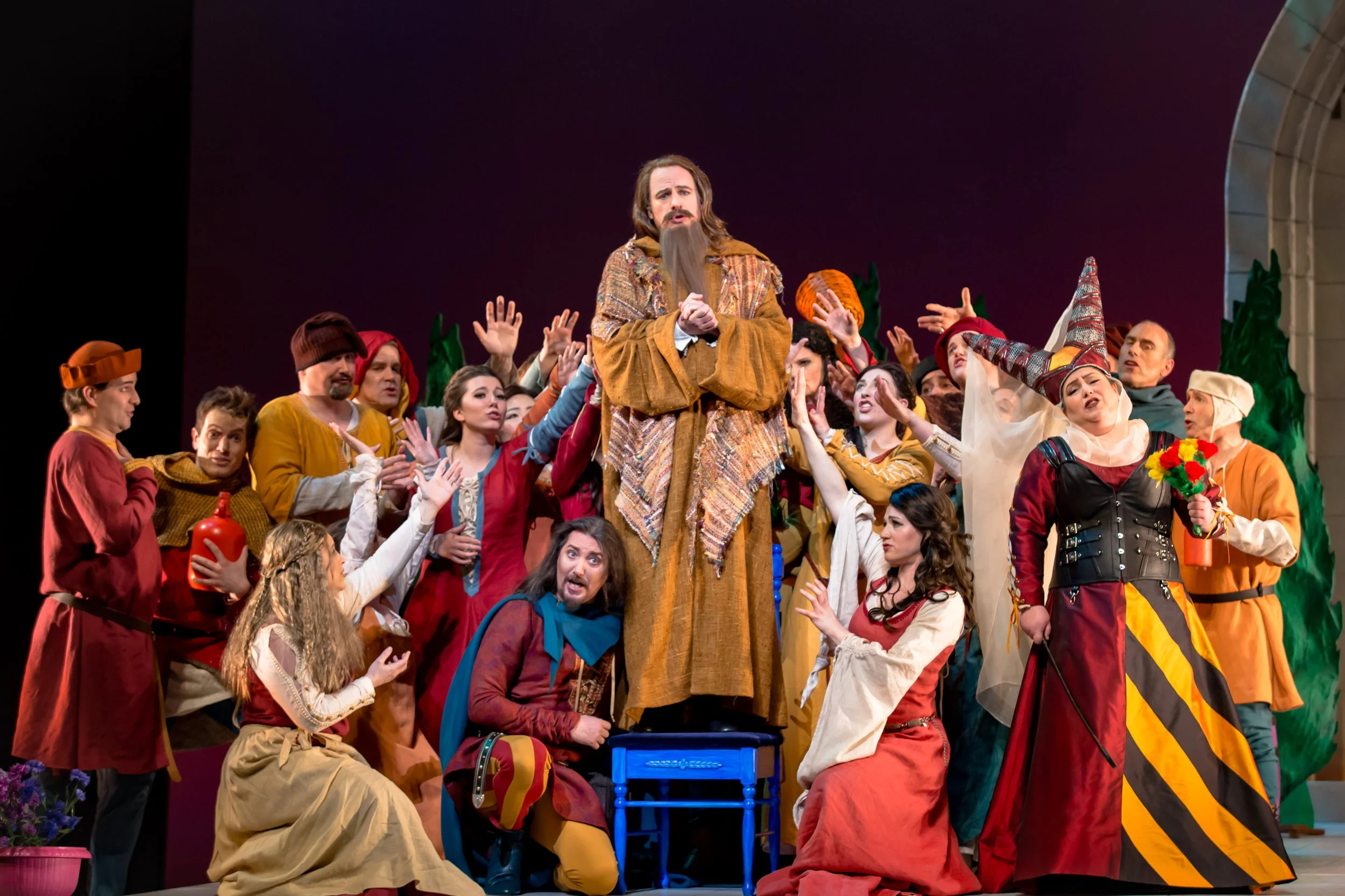
Count Ory, Edmonton Opera, 2018/19
The Building Blocks of Opera
Every opera starts with two core pieces.
The Libretto - the text or script written by a librettist
The Score - the music, written by the composer
The librettist and composer work together much like a playwright and film composer rolled into one. The result becomes a complete work that can be interpreted differently each time it’s performed. Through direction, design, and the unique voices of singers, one story can be transformed.
Common Opera Terms
Aria - A solo song where a character expresses emotion
Recitative - A sung passage that moves the story along (a bit like musical dialogue)
Overture - The instrumental opening played by the orchestra
Ensemble - Multiple singers performing together, often with overlapping lines
Chorus - The full vocal group that adds energy and atmosphere
Bravo / Brava / Bravi - Traditional cheers for a great performance (Male / Female / Group)
Voice Types: The Spectrum of Sound
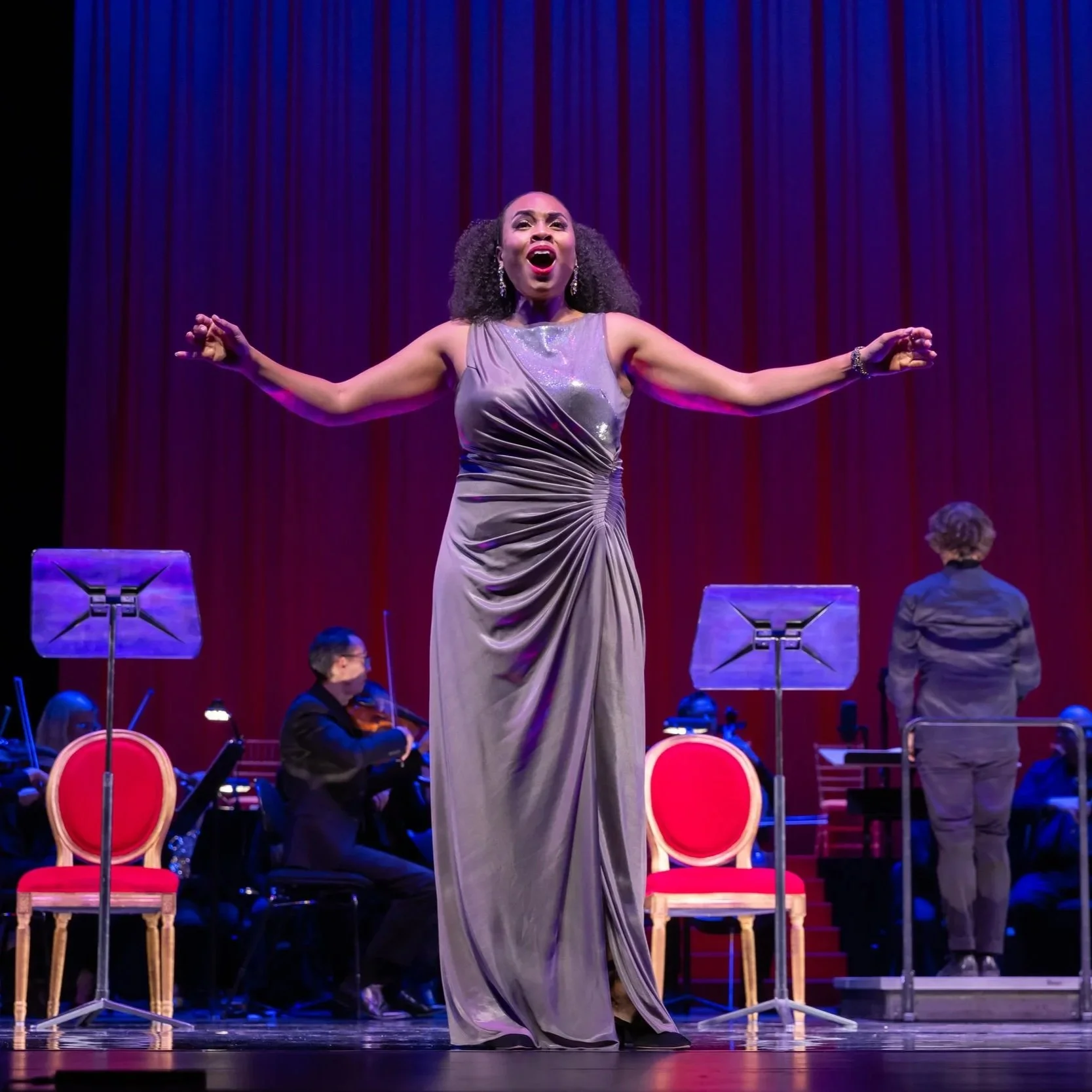
Don Giovanni, Edmonton Opera, 2023/24
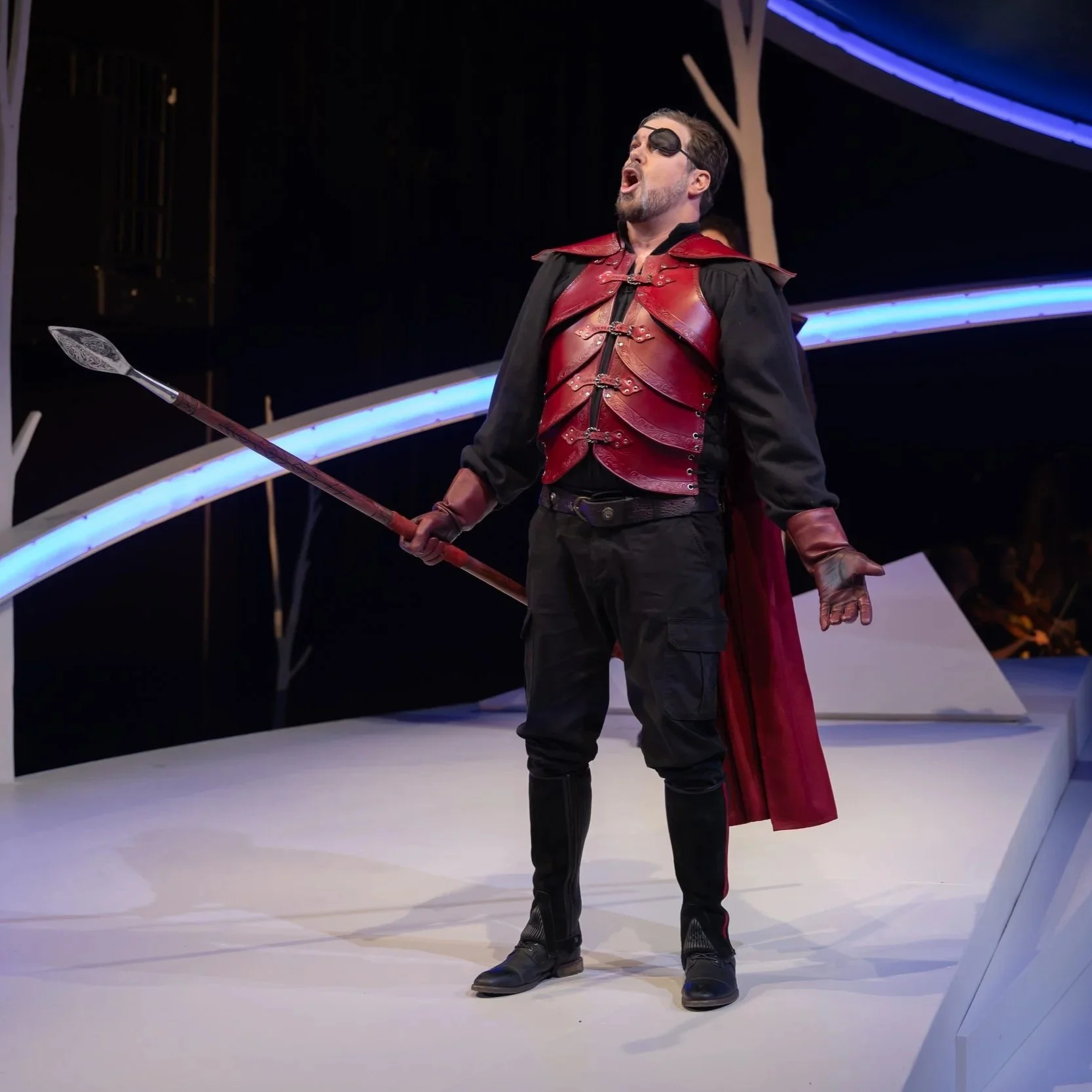
Die Walküre, Edmonton Opera, 2024/25
Opera singers are categorized by their voice type, which depends on range, tone, and character.
Female Voices
Soprano - Highest voice, often the heroine or lead
Mezzo-soprano - Warm, rich tone frequently playing strong or complex women
Contralto - Deep and powerful, rare in opera
Male Voices
Tenor - Bright, agile, usually the romantic lead
Baritone - Mid-range, often the conflicted or comic character
Bass - Deepest voice, lending gravity or authority
Song and Scene types
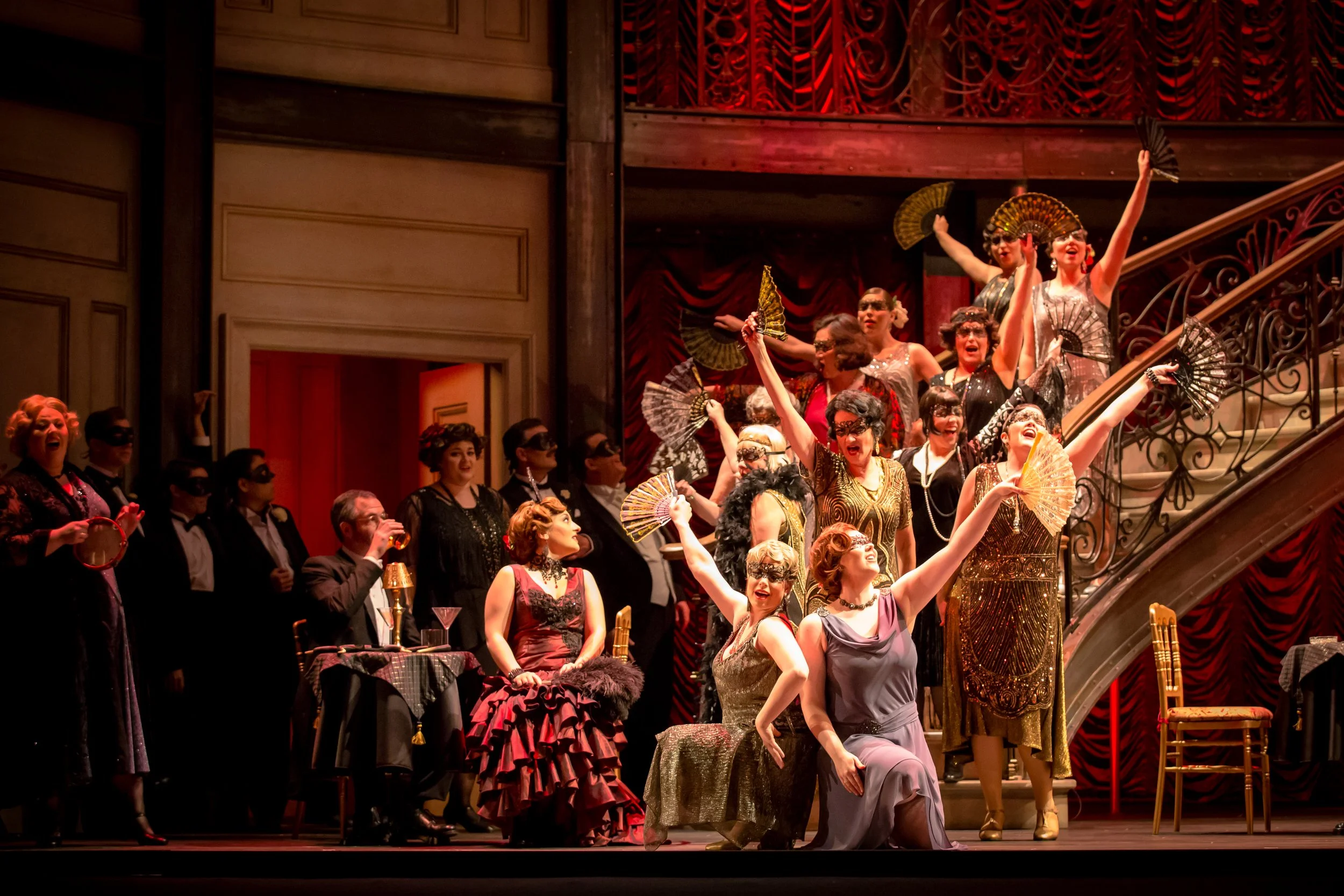
La Traviata, Edmonton Opera, 2018/19
Aria - Solo song and the emotional spotlight moment
Duet / Trio / Quartet - Two, three, or four characters singing together
Chorus - A group number that builds the world around the story
Finale - The climactic closing piece of an act or the entire opera
Types of Opera
Opera isn’t one single style — it’s a spectrum of tone and size.
Grand Opera - Epic scale and serious drama (Aida)
Comic Opera (Opera Buffa) - Fast-moving, funny, full of mistaken identities (The Barber of Seville)
Operetta - Shorter and lighter, sometimes partly spoked (The Merry Widow)
Contemporary Opera - Modern stories with new sounds (The Handmaid’s Tale)
Famous Composers (And why they’re icons)
Mozart - Balanced beauty and humour with emotional depth (The Marriage of Figaro)
Verdi - Passion, power, and unforgettable melodies (La Traviata)
Puccini - Real people, real heartbreak (Madama Butterfly)
Wagner - Towering myth and music (The Ring Cycle)
Bizet - Catchy songs, bold characters (Carmen)
Heggie / Adams / Glass - Modern masters bringing today’s stories to the stage
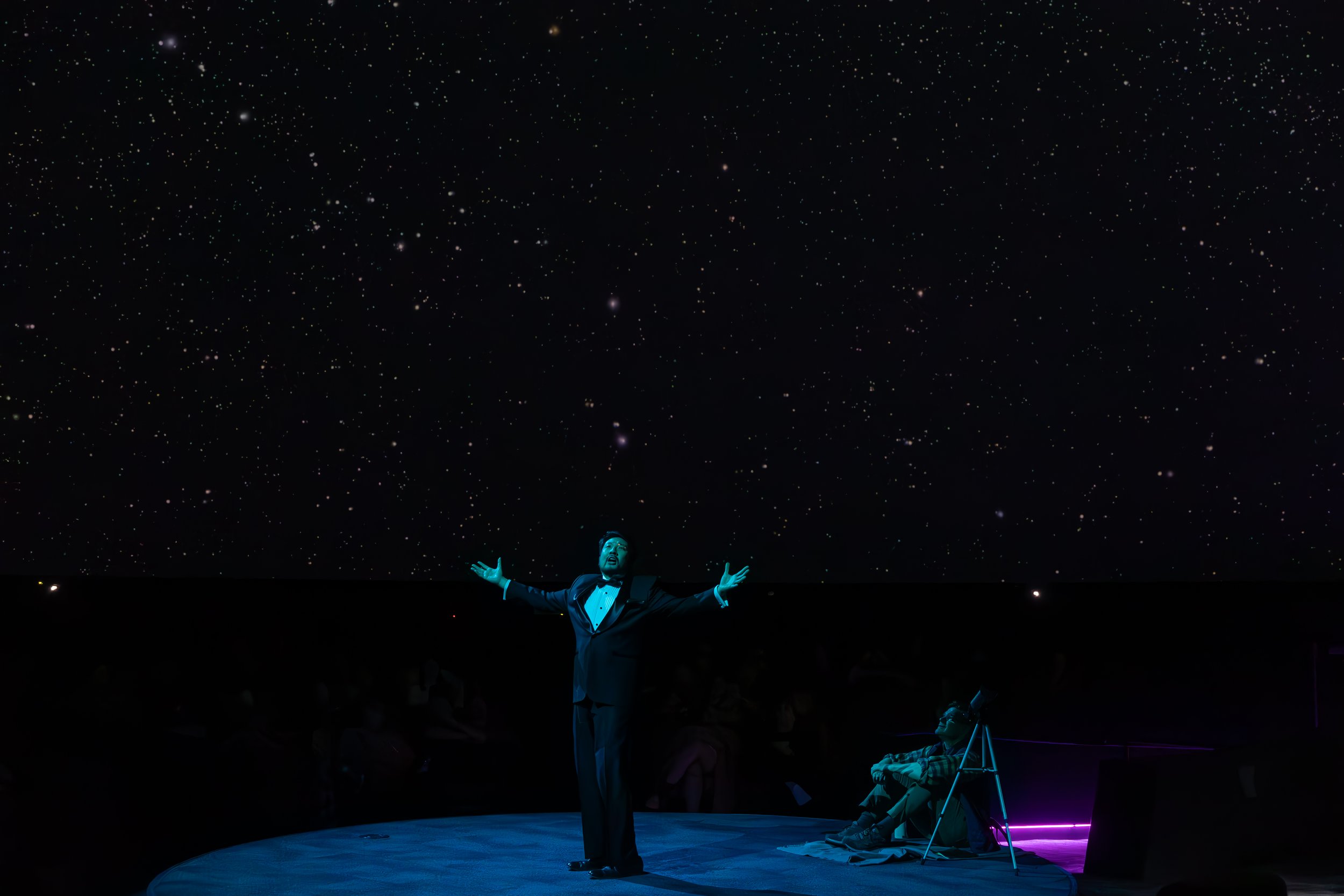
Aquarius: Songs of the Stars, Edmonton Opera, 2024/25
Etiquette & Myths
Opera has a reputation for being formal, but it’s much more relaxed than many imagine!
Dress however you feel comfortable. Some dress up, some don’t. It’s your night!
Clap freely. After a big aria, applause is part of the fun
Don’t worry about the language. Surtitles (translations projected above the stage) make it easy to follow along. Fun fact, surtitles were created in Canada!
Arrive early. Grab a drink, find your seat, and have fun with some activities in the lobby we have prepared for you.
Where to begin
Start with something that grabs you — a famous tune, a story you already love, or a title that sparks curiosity. There is no wrong entry point.
Ready to see what the excitement is about? Explore our 2025/26 season!